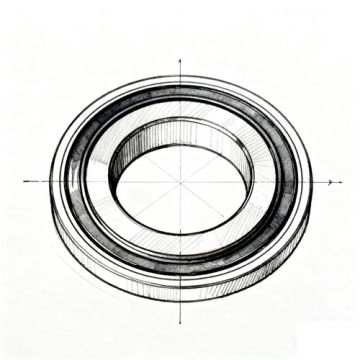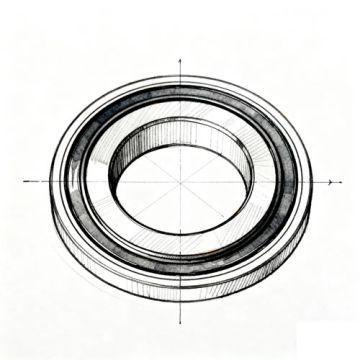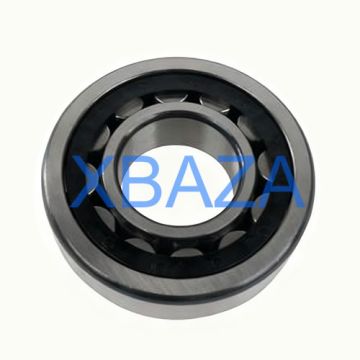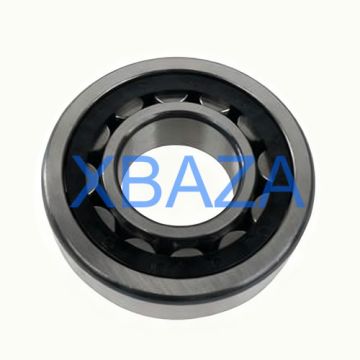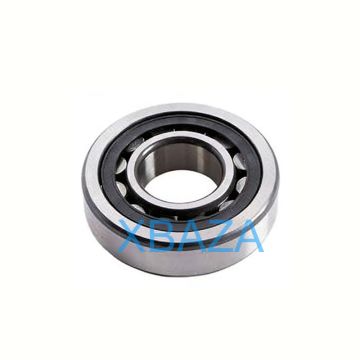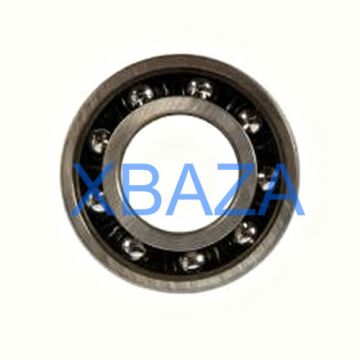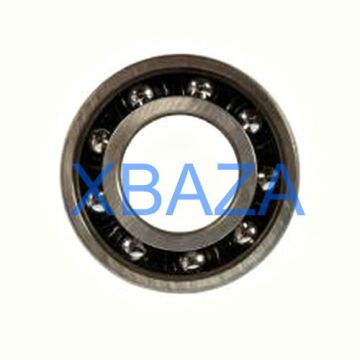

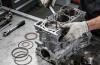




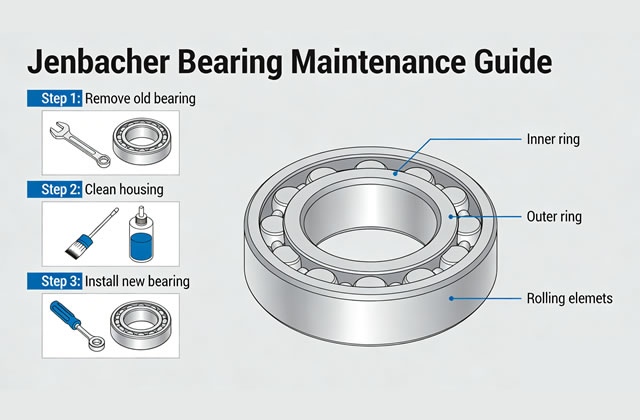
Jenbacher bearings are critical load-bearing components in Jenbacher gas engines, supporting rotating parts (crankshaft, camshaft, connecting rods) and reducing friction between moving metal surfaces. As the "mechanical joints" of the engine, Jenbacher bearings (primarily plain bearings/bushings, roller bearings, and thrust bearings) operate under extreme conditions: high compressive loads (up to 200 MPa for main crankshaft bearings), continuous rotational speeds (1500–1800 RPM), and thermal loads (up to 180°C in the crankcase). Improper maintenance of bearings leads to rapid wear, seizure, or spalling—resulting in crankshaft/camshaft damage, oil pressure loss, and catastrophic engine failure. This comprehensive guide outlines all critical aspects of Jenbacher bearing maintenance, from selection and inspection to installation and preventive care, ensuring optimal performance and extended service life.
1. Fundamental Understanding of Jenbacher Bearing Design
Jenbacher bearings are engineered to meet the unique demands of gas-fueled engines, with specialized designs for different applications (crankshaft main bearings, connecting rod bearings, camshaft bearings):
- Design: Bi-metal (steel backing + lead-copper or aluminum-tin alloy lining) or tri-metal (additional nickel barrier layer) plain bearings.
- Load capacity: Rated for peak loads of 180–220 MPa (Jenbacher J600 engines).
- Clearance: 0.020–0.035 mm (oil film formation critical for load distribution).
- Key feature: Grooved oil channels to distribute pressurized lubrication across the bearing surface.
- Design: Thin-wall bi-metal plain bearings (1.5–2.0 mm thickness) with anti-fatigue steel backing.
- Load profile: Cyclic dynamic loads (alternating compression/tension) from piston movement.
- Clearance: 0.015–0.030 mm (tighter than main bearings to handle radial loads).
- Key feature: Full circumferential oil groove for 360° lubrication.
- Design: Sintered bronze or aluminum alloy bushings (plain bearings) press-fit into cylinder head bores.
- Load capacity: Lower radial loads (20–40 MPa) compared to crankshaft bearings.
- Clearance: 0.020–0.035 mm (optimized for low-friction operation).
- Key feature: Porous structure to retain lubricant (self-lubricating properties).
- Design: Multi-layer thrust washers (steel backing + friction-reducing lining) to control axial crankshaft movement.
- Load capacity: Axial loads up to 50 kN (Jenbacher J920 engines).
- Endplay control: Maintains crankshaft endplay at 0.10–0.25 mm (OEM spec).
All Jenbacher bearings meet strict OEM material and dimensional standards—non-OEM bearings lack the fatigue resistance and load capacity required for gas engine operation, and their use voids warranty and increases failure risk.
2. Pre-Maintenance Preparation: Safety & Tooling
Bearing maintenance involves precision measurement and installation—even minor errors (e.g., incorrect clearance, dirt contamination) cause immediate bearing failure. Proper preparation is critical to avoid costly mistakes.
2.1 Non-Negotiable Safety Protocols
- Complete engine shutdown & isolation: Shut down the engine, disconnect all power/fuel/gas sources, and implement LOTO (Lock Out/Tag Out) procedures to prevent accidental startup. Allow the engine to cool fully (4–6 hours) to avoid thermal expansion-related measurement errors.
- Clean workspace requirement: Bearings are extremely sensitive to dirt/debris—work in a dust-free area (preferably a clean room or enclosed workshop). Use lint-free cloths and avoid bare hand contact with bearing surfaces (skin oils cause corrosion and reduce lubricity).
- PPE for bearing handling: Wear nitrile gloves (no latex—latex particles contaminate bearings), safety glasses (protect from debris during disassembly), and clean mechanic coveralls (prevent fabric lint contamination).
- Component labeling: Label bearings and bearing caps with their original positions (e.g., "Main Bearing #1", "Rod Bearing #3")—Jenbacher bearings are often sized to match journal wear and must be reinstalled in their original locations.
2.2 Essential Tools for Bearing Maintenance
- Precision measuring tools:
- Plastigage (0.025–0.100 mm range) – for measuring bearing clearance (Jenbacher-recommended method).
- Micrometer set (0.001 mm resolution) – for journal diameter measurement.
- Bore gauge (0.001 mm resolution) – for measuring bearing bore diameter.
- Feeler gauges (0.01–1.0 mm) – for thrust bearing endplay measurement.
- Cleaning supplies:
- Jenbacher-approved solvent (low-residue, non-corrosive) – for cleaning bearing surfaces.
- Ultrasonic cleaner – for removing embedded debris from bearing bores/caps.
- Lint-free microfiber cloths and compressed air (oil-free, 60–80 PSI) – for drying and debris removal.
- Installation tools:
- Bearing installation tool (OEM-spec) – for press-fitting camshaft bushings without damage.
- Torque wrench (calibrated, 1/4” and 1/2” drive) – for precise bearing cap torquing.
- Torque angle gauge – for torque-angle tightening sequences (required for main/rod bearing caps).
- Assembly lube (Jenbacher PN: 000123457) – high-pressure lubricant for initial startup protection.
- Inspection tools:
- Magnifying lamp (10–20x magnification) – for detecting bearing lining wear/scoring.
- Magnetic Particle Inspection (MPI) kit – for checking bearing backing for cracks.
- Oil analysis kit – for detecting metal particles (indicates bearing wear).
3. Comprehensive Inspection Procedures
Bearing inspection must be performed during every major overhaul (8,000–12,000 operating hours) or if any of these symptoms are present: low oil pressure, knocking noises from the crankcase, metal particles in oil, or excessive engine vibration.
3.1 Visual Inspection of Bearings
Remove bearings carefully (avoid bending/damaging the steel backing) and inspect for these critical defects:
- Lining wear: Check for uneven wear, scoring, or material loss on the bearing lining. Minor scuffing (fine scratches) is acceptable; deep grooves (> 0.05 mm) or exposed steel backing require replacement.
- Spalling/flaking: Small metal flakes on the lining surface indicate fatigue failure—this is a critical defect requiring immediate bearing replacement.
- Corrosion/rusting: Pitting or discoloration (black/brown spots) on the lining indicates contaminated oil or moisture ingress—replace bearings and investigate oil system contamination.
- Overheating damage: Blue/brown discoloration of the steel backing or melted lining material indicates inadequate lubrication or excessive clearance—address root cause (oil pressure, journal wear) before replacing bearings.
- Bearing crush/distortion: Check bearing edges for deformation or loss of "crush" (the interference fit that secures the bearing in the cap/bore). Distorted bearings cause oil leakage and uneven load distribution.
- Oil hole alignment: Verify that bearing oil holes align perfectly with oil passages in the engine block/head—misalignment cuts off lubrication and causes instant bearing failure.
3.2 Bearing Clearance Measurement (Critical Step)
Use Plastigage to measure bearing clearance (most accurate method for Jenbacher engines):
- Clean the bearing and journal surface thoroughly (no oil/grease).
- Place a piece of Plastigage (matching the expected clearance range) across the journal (not aligned with oil holes).
- Install the bearing cap (without rotating the journal) and torque to OEM specs (e.g., 80 Nm + 90° for J600 main bearing caps).
- Remove the cap and measure the flattened Plastigage width with the provided scale—this is the actual bearing clearance.
- Compare to Jenbacher OEM specs:
- Main crankshaft bearings: 0.020–0.035 mm (max allowable: 0.050 mm).
- Connecting rod bearings: 0.015–0.030 mm (max allowable: 0.045 mm).
- Camshaft bearings: 0.020–0.035 mm (max allowable: 0.050 mm).
Clearance outside OEM limits requires:
- Undersize bearings (if journal wear is within regrind limits).
- Journal regrinding (if wear exceeds 0.25 mm).
- Crankshaft/camshaft replacement (if journal wear is severe).
3.3 Thrust Bearing Endplay Measurement
Measure crankshaft endplay (axial movement) using feeler gauges:
- Insert feeler gauges between the crankshaft thrust face and thrust bearing washers.
- OEM spec for Jenbacher engines: 0.10–0.25 mm (max allowable: 0.30 mm).
- Excessive endplay (> 0.30 mm) requires thrust bearing replacement—failure to do so causes crankshaft axial movement and main bearing damage.
3.4 Lubrication System Inspection (Root Cause Analysis)
80% of bearing failures are caused by inadequate lubrication—always inspect the lubrication system when bearings show wear:
- Test oil pressure (OEM spec: 3–5 bar at idle, 8–10 bar at operating speed) – low pressure starves bearings of lubricant.
- Inspect oil pump for wear/damage – worn pump gears reduce oil flow to bearings.
- Check oil filters/screens for clogs – debris in the oil causes abrasive bearing wear.
- Analyze oil for contamination – metal particles, coolant, or fuel dilution indicate bearing wear or other engine issues.
- Verify oil viscosity – use only Jenbacher-spec oil (10W-40 or 15W-40 synthetic) – incorrect viscosity reduces oil film strength.
4. Bearing Installation Best Practices
Proper installation is the single most important factor in bearing longevity—follow these steps strictly:
- 100% cleanliness: Clean all bearing surfaces, journals, and caps with solvent and dry with compressed air. Even a 0.05 mm particle between the bearing and journal causes scoring and rapid failure.
- Pre-lubrication: Apply a thin, uniform layer of Jenbacher assembly lube to both sides of the bearing lining and journal surface. Do not use engine oil for initial installation (insufficient load capacity).
- Correct positioning:
- Ensure bearing tangs (locating tabs) fit securely into cap/block slots (prevents bearing rotation).
- Align oil holes in bearings with oil passages in the engine block/head (verify with a light source).
- Install bearings with the correct side facing out (lining side toward journal – marked "TOP" or "INSTALL SIDE" on OEM bearings).
- Torque sequence and values:
- Tighten bearing caps in the OEM-specified sequence (center to ends for main bearings, alternating for rod bearings).
- Use the two-step torque method:
- Pre-torque to 40% of final value (e.g., 40 Nm for 100 Nm final torque).
- Final torque to OEM spec (often torque + angle – e.g., 80 Nm + 90° for J600 main bearings).
- Never over-torque – over-torquing crushes the bearing, reduces clearance to zero, and causes seizure on startup.
- Post-installation verification:
- Rotate the crankshaft/camshaft by hand – it should turn smoothly with no resistance or binding.
- Recheck bearing clearance with Plastigage after torquing (verify clearance is within spec).
- Prime the oil system before startup (use an oil priming tool) to ensure oil reaches all bearings – dry startup causes instant bearing failure.
5. Preventive Maintenance for Bearings
Proactive maintenance extends bearing service life (target: 20,000+ operating hours for Jenbacher bearings):
- Adhere to oil change intervals: Replace oil every 2,000 operating hours (Jenbacher spec) – old oil loses lubricity and contains abrasive particles that damage bearings.
- Use only OEM oil and filters: Non-OEM filters allow debris to pass through, and non-spec oil lacks the anti-wear additives required for bearing protection.
- Monitor oil pressure continuously: Install a real-time oil pressure gauge – a sudden drop in pressure indicates bearing wear or oil system failure (shut down the engine immediately).
- Regular oil analysis: Perform spectrometric oil analysis every 500 hours – elevated copper/lead levels indicate bearing lining wear (early warning of failure).
- Avoid engine overloading/overheating: Overloading increases bearing loads beyond design limits, and overheating degrades oil quality – both cause premature bearing failure.
- Proper engine break-in: After bearing replacement, run the engine at low load (50% rated power) for the first 50 hours – allows bearings to seat properly and form a stable oil film.
- Inspect bearings during routine overhauls: Even if no symptoms are present, inspect bearings for wear during every major service – early detection of minor wear prevents catastrophic failure.
6. Bearing Replacement Criteria (Non-Negotiable)
Replace Jenbacher bearings immediately if any of the following conditions are met:
| Failure Condition | Rationale for Replacement |
|---|---|
| Bearing clearance exceeds OEM maximum limits (main: 0.050 mm, rod: 0.045 mm) | Excessive clearance causes oil pressure loss, journal wear, and bearing fatigue failure. |
| Visible lining wear (exposed steel backing, deep scoring, or material loss) | Worn lining cannot distribute loads evenly, leading to rapid seizure and journal damage. |
| Spalling, flaking, or pitting on bearing lining | Indicates fatigue failure – flakes break off and contaminate oil, causing further engine damage. |
| Overheating damage (discoloration, melted lining) | Damaged lining loses load-bearing capacity and causes metal-to-metal contact with journals. |
| Thrust bearing endplay > 0.30 mm | Excessive axial movement causes uneven main bearing wear and crankshaft misalignment. |
| Bearing tang damage or loss of crush fit | Allows bearing rotation in the cap/block, cutting off oil flow and causing instant failure. |
| Coolant/fuel contamination in oil (detected via oil analysis) | Contamination degrades bearing lining and causes corrosion – replace bearings and fix the leak source. |
Final Summary
Jenbacher bearings are the unsung heroes of gas engine reliability – they support the most heavily loaded rotating components and enable efficient, low-friction operation. Their maintenance demands absolute precision, cleanliness, and adherence to OEM specifications – even a single mistake (e.g., incorrect torque, dirt contamination) leads to immediate bearing failure and costly engine damage.
By following the guidelines outlined – rigorous inspection for wear/cracks, precise clearance measurement with Plastigage, proper installation with OEM torque values, and proactive lubrication system maintenance – you can maximize bearing service life, prevent catastrophic engine failure, and ensure consistent performance of Jenbacher gas engines. Always use genuine Jenbacher OEM bearings – non-OEM alternatives lack the material quality and engineering required for industrial gas engine operation, and their use is a false economy that leads to increased downtime and repair costs.