
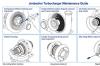






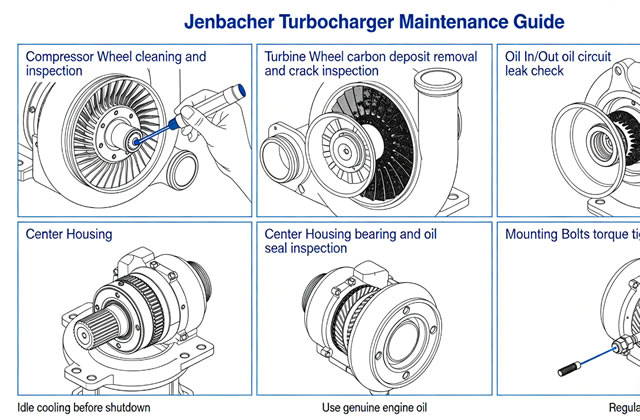
Jenbacher turbochargers are critical components in gas engine systems, responsible for boosting air intake pressure to enhance engine efficiency, power output, and fuel economy. Proper maintenance of these turbochargers is essential to prevent premature failure, minimize downtime, and ensure optimal performance of Jenbacher engines across industrial, power generation, and cogeneration applications. This guide outlines the key maintenance practices, inspection procedures, and best practices for Jenbacher turbocharger care.
1. Fundamental Principles of Jenbacher Turbocharger Operation
A Jenbacher turbocharger operates on the principle of using exhaust gas energy to drive a turbine wheel, which is connected to a compressor wheel via a rotating shaft. The compressor wheel draws in ambient air, compresses it, and delivers high-pressure air to the engine’s combustion chamber. This process increases the air-fuel mixture density, leading to more complete combustion and higher power output. Key components of a Jenbacher turbocharger include: turbine housing, compressor housing, center housing rotating assembly (CHRA), bearings, seals, and wastegate (where applicable).
2. Preventive Maintenance Schedule
Preventive maintenance is the cornerstone of turbocharger longevity. Below is a recommended maintenance schedule based on operating hours, aligned with Jenbacher’s official guidelines:
| Maintenance Task | Frequency | Key Actions |
|---|---|---|
| Visual Inspection | Every 500 operating hours / Monthly | Check for oil leaks, loose fasteners, damaged hoses, and abnormal noise/vibration |
| Oil Level & Quality Check | Every 250 operating hours / Weekly | Verify engine oil level; test oil for contamination, viscosity, and metal particles |
| Air Filter Replacement | Every 2000 operating hours / As needed | Replace clogged air filters to prevent compressor wheel damage from debris |
| Turbocharger Cleaning | Every 4000 operating hours | Clean compressor/turbine wheels of carbon deposits and oil sludge |
| Full Inspection & Bearing Check | Every 8000 operating hours | Inspect shaft play, bearing wear, seals, and replace if necessary |
| Complete Overhaul | Every 16,000 – 24,000 operating hours | Disassemble, inspect all components, replace worn parts, reassemble and test |
3. Step-by-Step Maintenance Procedures
3.1 Pre-Maintenance Preparation
- Ensure the engine is shut down and completely cooled (minimum 2 hours) to avoid thermal shock and burns.
- Isolate the turbocharger from the engine system by closing relevant valves and disconnecting power sources.
- Clean the surrounding area to prevent debris from entering the turbocharger during maintenance.
- Gather necessary tools: torque wrench, socket set, cleaning solvents, inspection mirror, feeler gauges, and replacement parts (gaskets, oil seals, filters).
3.2 Visual Inspection & Leak Detection
- Inspect the turbine housing for cracks, corrosion, or damage from exhaust heat.
- Check the compressor housing for signs of impact damage (from debris) or oil leaks.
- Examine oil supply/drain lines for leaks, blockages, or degradation; replace damaged lines immediately.
- Verify all mounting bolts and clamps are tightened to Jenbacher’s specified torque values.
- Listen for abnormal noises (grinding, rattling) when rotating the turbocharger shaft by hand – this indicates bearing wear.
3.3 Cleaning Procedures
- Remove the air inlet hose and clean the compressor wheel with a soft brush and solvent to remove dust, dirt, and carbon deposits.
- Clean the turbine wheel (if accessible) to remove exhaust soot and carbon buildup – avoid using abrasive tools that scratch the wheel surface.
- Flush the oil drain line to remove sludge or blockages that can cause oil pooling in the CHRA.
- Allow all components to dry completely before reassembly to prevent oil contamination.
3.4 Bearing & Shaft Inspection
- Measure radial shaft play using a dial indicator; maximum allowable play is specified in Jenbacher’s service manual (typically ≤ 0.15mm).
- Check axial shaft play; replace the CHRA if play exceeds the manufacturer’s limit.
- Inspect bearing surfaces for scoring, pitting, or discoloration (from overheating); replace bearings if any damage is found.
4. Common Failure Causes & Mitigation
Understanding the root causes of Jenbacher turbocharger failure is key to effective maintenance. Below are the most common issues and how to prevent them:
- Oil Contamination/Lack of Lubrication: Caused by dirty oil, clogged oil filters, or restricted oil lines. Mitigation: Follow Jenbacher’s oil change schedule and use only approved engine oil (e.g., Jenbacher J-Oil).
- Foreign Object Damage (FOD): Debris (dirt, metal particles) entering the compressor/turbine wheel. Mitigation: Maintain clean air filters and inspect intake systems regularly.
- Thermal Shock: Rapid cooling of a hot turbocharger (e.g., shutting down the engine immediately after heavy load). Mitigation: Allow the engine to idle for 3-5 minutes before shutdown to cool the turbocharger gradually.
- Overboost: Caused by a faulty wastegate or boost controller. Mitigation: Calibrate boost pressure regularly and replace faulty wastegate components.
- Oil Leaks: Due to worn seals or excessive crankcase pressure. Mitigation: Replace worn seals and check crankcase ventilation systems.
5. Post-Maintenance Testing & Verification
After completing maintenance or repairs, perform the following tests to ensure the turbocharger operates correctly:
- Start the engine and let it idle; check for oil leaks, abnormal noises, or vibrations.
- Monitor boost pressure using the engine’s diagnostic system – ensure it matches Jenbacher’s specifications for the engine model.
- Perform a load test (gradually increasing engine load) and verify turbocharger performance (no smoke, stable boost pressure, normal temperature).
- Document all maintenance activities, including part replacements, measurements, and test results – this creates a service history for future reference.
6. Conclusion
Jenbacher turbochargers are precision-engineered components that require consistent, manufacturer-aligned maintenance to deliver reliable performance. By following the preventive maintenance schedule, conducting thorough inspections, and addressing issues promptly, operators can extend the service life of turbochargers, reduce unplanned downtime, and ensure Jenbacher engines operate at peak efficiency. Always refer to Jenbacher’s official service manual for model-specific guidelines, and use only genuine Jenbacher replacement parts to maintain warranty coverage and component compatibility.