






Critical Long-Term Service Protocols for Caterpillar Engine Combustion Chambers
The combustion chamber is the heart of every Caterpillar (CAT) diesel engine—where fuel combustion generates power, drives pistons, and enables engine operation. For CAT industrial, marine, mining, and heavy-duty truck engines, proper combustion chamber maintenance directly impacts performance, fuel efficiency, emissions compliance, and service life. Neglecting routine care leads to costly failures, including piston damage, cylinder head cracking, pre-ignition, power loss, and unplanned downtime.
This complete guide outlines routine inspection, preventive maintenance, troubleshooting, repair, and post-service testing protocols for CAT combustion chambers, engineered to maximize reliability and minimize operational costs for all CAT engine models (3406, C15, C18, C27, C32, 3500 series, etc.).
1. Core Function of the CAT Combustion Chamber
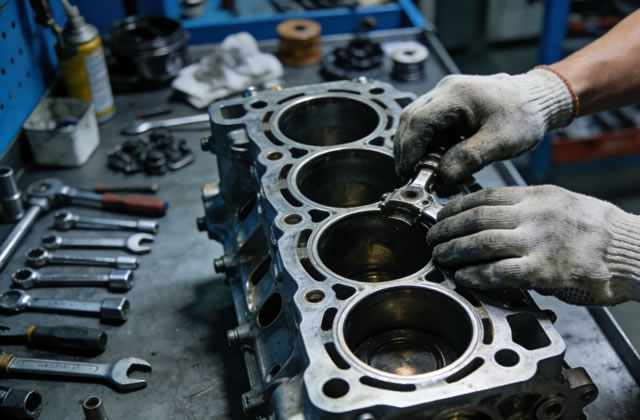
The CAT combustion chamber is a precision-engineered enclosed space formed by:
- Cylinder head (including valves, injectors, and fire deck)
- Cylinder liner
- Piston crown (with compression rings)
- Head gasket (seals the chamber and prevents leakage)
Its primary role is to contain high-pressure, high-temperature diesel combustion (up to 2,500°F/1,370°C and 3,000+ PSI) while directing energy to the piston. Even minor wear or contamination disrupts combustion efficiency and causes cascading engine damage.
2. Routine Preventive Maintenance (Daily & Service Intervals)
Preventive maintenance is the most cost-effective way to protect CAT combustion chambers. Follow CAT’s official service schedules (adjust for heavy-duty, high-load, or dusty environments).
2.1 Daily Visual & Operational Checks
- Monitor exhaust smoke: black smoke = incomplete combustion/fouling; white smoke = coolant leakage; blue smoke = oil intrusion
- Track engine power: sudden power loss indicates combustion chamber issues
- Check for fluid leaks: coolant or oil leaks near the cylinder head signal head gasket failure or chamber damage
- Verify fuel quality: use only CAT-approved low-sulfur diesel to prevent injector and chamber fouling
2.2 Scheduled Maintenance (Every 250/500/1,000 Operating Hours)
250 Hours:
- Inspect fuel injectors for clogging or leakage
- Check valve lash and valve seat integrity
- Clean air intake filters
500 Hours:
- Perform cylinder compression testing (350–450 PSI for most CAT engines)
- Inspect head gasket for blowout or leakage
- Remove carbon deposits from chamber components
1,000 Hours / Major Service:
- Full borescope inspection of combustion chamber
- Measure liner, piston, and cylinder head wear
- Replace worn gaskets, seals, and o-rings
- Cooling system pressure testing
3. Detailed Inspection Procedures (Borescope & Visual Assessment)
Internal inspection is mandatory to detect hidden damage. Use a high-resolution borescope to access the combustion chamber through injector ports or valve openings.
Key Inspection Points:
- Carbon Deposits: Clean all heavy buildup to prevent hot spots
- Piston Crown: Check for pitting, cracking, or melting
- Cylinder Liner: Inspect for scuffing, scoring, or cavitation
- Cylinder Head Fire Deck: Check for cracks, warping, or erosion
- Valves & Seats: Verify no burning or poor seating
- Head Gasket Surface: Ensure no blowout or leakage
CAT Tolerance Standards: Cylinder head warpage ≤ 0.05mm; liner wear ≤ 0.1mm.
4. Common Combustion Chamber Failures & Root Causes
- Carbon Fouling: Caused by poor fuel/injectors; fixed by decarbonizing
- Head Gasket Failure: Caused by overheating/improper torque; fixed by head resurfacing + OEM gasket
- Cylinder Head Cracking: Caused by thermal stress; requires head replacement
- Piston/Liner Damage: Caused by contamination/overheating; requires component replacement
- Low Compression: Caused by worn valves/rings; fixed by valve/ring service
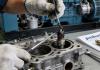
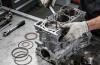
5. Step-by-Step Combustion Chamber Repair & Overhaul
- Preparation: Disconnect power, drain fluids, label components
- Disassembly: Remove cylinder head per CAT torque sequence
- Cleaning & Resurfacing: Decarbonize; machine head if warped
- Component Replacement: Install CAT OEM gaskets, seals, and wear parts
- Reassembly & Torquing: Follow factory torque specs strictly
6. Post-Repair Testing & Validation
- Cylinder Compression Test
- Leak-Down Test (≤5% leakage acceptable)
- Cooling System Pressure Test
- Cold/Hot Engine Run Test
- Exhaust Emissions Test
7. Prolonging Service Life: Best Practices
- Use only CAT genuine parts and approved fluids
- Avoid engine overloading and prolonged idling
- Service injectors every 500 hours
- Maintain cooling system efficiency
- Perform regular oil analysis
8. Conclusion
The CAT combustion chamber is a precision component that demands consistent, professional maintenance. Adhering to CAT’s factory service protocols, performing routine inspections, and addressing issues early will extend engine life, improve fuel efficiency, reduce repair costs, and eliminate unplanned downtime.
Always consult your CAT operation and maintenance manual for model-specific specifications and service intervals.

