






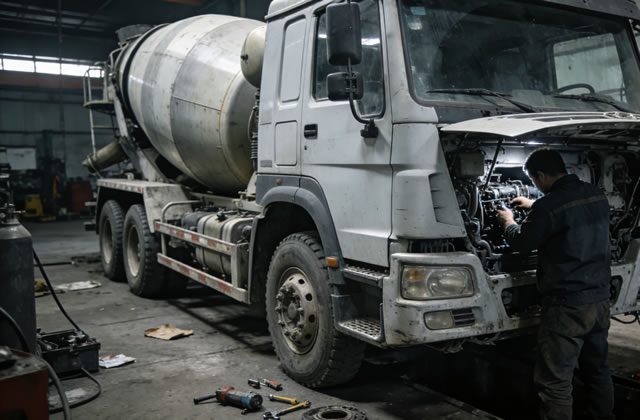
This official guide covers routine maintenance, preventive care, troubleshooting, and professional repair procedures for all CAT concrete mixer models (including CAT 65B, 75B, 95B, 105B, and truck-mounted CAT mixer systems). Adhering to these standards ensures maximum uptime, extended service life, compliance with CAT warranty terms, and safe operation on construction sites.
1. Daily Pre-Operation Inspection & Maintenance
Perform these checks before every shift to avoid unexpected breakdowns:
- Check engine oil, coolant, hydraulic fluid, and diesel fuel levels – top off with CAT-approved fluids only.
- Inspect the mixer drum, hopper, and charging chute for cracks, wear, or concrete buildup.
- Verify drum rotation (forward/reverse) and ensure no abnormal noise or vibration occurs.
- Check hydraulic hoses, fittings, and cylinders for leaks, cracks, or loose connections.
- Inspect tires, brakes, lights, and safety guards for damage or misalignment.
- Clean concrete residue from the drum, blades, and discharge area to prevent hardened buildup.
- Test all controls, emergency stop buttons, and safety interlocks for proper function.
2. Weekly Maintenance Schedule
- Lubricate all grease points (drum bearings, gearbox, pivot points, hydraulic pins) with CAT high-temperature lithium grease.
- Inspect and tighten all bolts, nuts, and mounting brackets (drum, frame, engine mounts).
- Check hydraulic filter pressure and clean/replace the filter if clogged.
- Clean air intake filters and radiator fins to prevent overheating.
- Inspect mixer blades and liners for wear – replace if thickness is reduced by 50%.
- Test drum speed and torque; adjust hydraulic pressure if rotation is inconsistent.
- Drain water sediment from the fuel water separator and hydraulic tank.
3. Monthly & Periodic Maintenance
3.1 Engine System
- Replace engine oil and CAT oil filter every 250 operating hours or 30 days.
- Replace fuel filter, air filter, and coolant filter every 500 hours.
- Flush and replace engine coolant every 2,000 hours or 2 years.
- Inspect belts, hoses, and pulleys for wear, cracks, or tension loss.
3.2 Hydraulic System
- Change hydraulic fluid and filter every 1,000 hours – use only CAT HYDO Advanced 10 fluid.
- Inspect hydraulic pump and motor for noise, overheating, or performance loss.
- Check hydraulic tank breather cap and clean/replace if blocked.
- Test hydraulic relief valve pressure to factory specifications.
3.3 Drum & Drive Train
- Inspect gearbox oil level and replace gear oil every 1,500 hours.
- Check drum roller bearings and replace if worn or noisy.
- Measure drum runout and align rollers if misalignment is detected.
- Repair or replace worn drum blades and liners to maintain mixing quality.
3.4 Chassis & Electrical System
- Inspect battery terminals, clean corrosion, and test voltage.
- Check wiring harnesses for fraying, water damage, or loose connections.
- Lubricate suspension, steering, and pivot joints.
- Calibrate sensors, control panels, and digital displays.
4. Common Troubleshooting & On-Site Repairs
4.1 Mixer Drum Fails to Rotate
Possible Causes: Low hydraulic fluid, clogged filter, faulty pump, broken gearbox, seized bearings, or electrical control failure.
Repair Steps: Refill fluid → replace filter → test pump → inspect gearbox → replace bearings → reset control module.
4.2 Hydraulic Leaks
Possible Causes: Damaged hoses, loose fittings, worn seals, cracked cylinders.
Repair Steps: Tighten fittings → replace O-rings/seals → install new hoses → reseal hydraulic cylinders.
4.3 Poor Mixing Performance
Possible Causes: Worn blades, drum buildup, slow rotation, incorrect hydraulic pressure.
Repair Steps: Remove concrete buildup → replace blades → adjust hydraulic flow → calibrate drum speed.
4.4 Engine Overheating
Possible Causes: Low coolant, dirty radiator, faulty thermostat, clogged filters.
Repair Steps: Refill coolant → clean radiator → replace thermostat → install new filters.
4.5 Unusual Noise / Vibration
Possible Causes: Loose bolts, worn bearings, damaged gears, misaligned drum.
Repair Steps: Tighten hardware → replace bearings → repair gears → realign drum rollers.
5. Major Component Repair & Replacement
These procedures require certified CAT technicians or experienced heavy-equipment mechanics:
- Hydraulic Pump/Motor Replacement: Drain fluid, disconnect hoses, remove mounting bolts, install new CAT OEM pump, bleed air, test pressure.
- Drum Gearbox Overhaul: Disconnect drum, drain oil, disassemble housing, replace gears/bearings/seals, reassemble, refill gear oil.
- Drum Blade & Liner Replacement: Remove buildup, unbolt worn parts, install OEM CAT blades, torque to factory specs, test rotation.
- Roller & Bearing Replacement: Lift drum safely, remove old rollers, install new bearings/rollers, adjust alignment, test smooth rotation.
- Control System Repair: Diagnose with CAT ET diagnostic tool, replace faulty sensors/wiring/control modules, calibrate system.
6. Long-Term Storage & Preservation
For CAT mixers stored for 30+ days:
- Thoroughly clean the drum and remove all concrete residue.
- Drain all fluids (fuel, oil, coolant, hydraulic fluid) or add preservatives.
- Lubricate all moving parts and grease bearings heavily.
- Cover electrical components and disconnect the battery.
- Store in a dry, covered area; support tires to prevent flat spots.
- Run the engine and mixer monthly for 10–15 minutes to circulate fluids.
7. Safety & Best Practices
- Never enter the mixer drum without a certified confined-space permit and lockout/tagout.
- Do not overload the mixer beyond CAT’s rated capacity.
- Train all operators on proper use and maintenance protocols.
- Keep a detailed service log for all inspections, repairs, and part replacements.
- Schedule annual professional inspection by a CAT authorized dealer.
Final Notes
Proactive maintenance is the most cost-effective way to maximize the performance and lifespan of your CAT mixer. Skipping service intervals leads to costly downtime, major component failure, and safety hazards. Always refer to your specific CAT mixer model’s official service manual for model-specific torque values, fluid specs, and maintenance intervals.
For emergency repairs or technical support, contact your local CAT dealer 24/7.

