







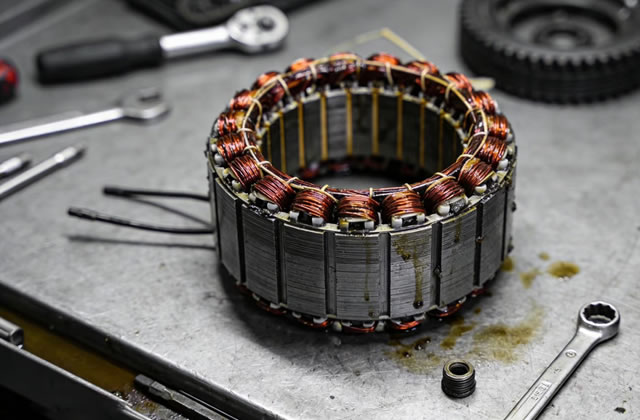
For Caterpillar Generator & Electric Drive Equipment | Industrial-Grade Maintenance Standards
1. Introduction to CAT Stator Core Functionality
The stator is the stationary, non-rotating core component of Caterpillar (CAT) electric generators, motors, and electric drive systems. It works alongside the rotor to convert mechanical energy to electrical energy (generators) or electrical energy to mechanical energy (motors). CAT stators are engineered for heavy-duty industrial applications, including oil and gas, marine, mining, power generation, and construction equipment.
Unlike the rotor, the stator remains fixed within the machine housing and contains laminated steel cores and insulated copper windings. Its performance directly impacts output efficiency, voltage stability, heat resistance, and overall equipment lifespan. Proper maintenance of the CAT stator is critical to avoid unplanned downtime, costly repairs, and catastrophic equipment failure.
2. Pre-Maintenance Safety Protocols (Mandatory)
- Disconnect all power sources: main power, backup power, and control circuits. Lockout and tagout (LOTO) all electrical panels.
- Discharge all capacitors and inductive components to eliminate residual voltage.
- Allow the stator and surrounding components to cool completely (below 40°C/104°F) before inspection.
- Wear PPE: insulated gloves, safety goggles, flame-resistant clothing, and non-slip boots.
- Use only insulated tools approved for high-voltage electrical work.
- Confirm zero voltage with a calibrated multimeter before touching any stator components.
- Ensure proper ventilation in the work area, especially during cleaning, drying, and insulation testing.
3. Routine Visual Inspection (Daily/Weekly/Monthly)
3.1 External Visual Check
- Inspect the stator housing for cracks, deformation, corrosion, oil leaks, or water intrusion.
- Check air vents and cooling ducts for blockages, dust, debris, or insect nests.
- Verify terminal connections for tightness, discoloration, overheating, or corrosion.
- Look for signs of burning, melting, or charring on winding insulation and lead wires.
3.2 Contamination Assessment
- Check for oil, grease, coolant, or moisture buildup on stator core and windings.
- Identify dust, dirt, metal particles, or carbon deposits that reduce heat dissipation.
- Record any abnormal odors (burning insulation, oil, or rubber) during operation.
3.3 Vibration & Noise Monitoring
- Listen for unusual grinding, humming, or rattling noises indicating loose laminations or windings.
- Monitor vibration levels—excessive vibration damages winding insulation and core structure.
4. Periodic Electrical Testing (Quarterly/Annual)
Electrical testing is the most reliable method to evaluate stator health and insulation integrity. Use CAT-recommended testing equipment for accurate results.
4.1 Insulation Resistance (IR) Test
- Use a 500V or 1000V megohmmeter based on stator voltage rating.
- Measure resistance between stator windings and frame ground.
- Minimum acceptable value: ≥100 MΩ for new/repaired stators; ≥50 MΩ for operating units.
- Record readings for trend analysis—declining values indicate insulation deterioration.
4.2 Winding Resistance Test
- Test resistance across all three phases (three-phase stators).
- Phase resistance deviation must be ≤1% to confirm no short circuits or loose connections.
- Identify open circuits, partial shorts, or damaged conductor strands.
4.3 Hi-Pot (High Potential) Test
- Perform only on clean, dry stators; avoid on severely aged insulation.
- Apply rated high voltage to test insulation strength and weakness.
- Conducted by certified technicians per CAT OEM specifications.
4.4 Surge Comparison Test
- Detect turn-to-turn winding shorts invisible to other tests.
- Compare surge waveforms between phases for consistency.
- Critical for early failure prevention in high-load CAT equipment.
5. Professional Cleaning & Decontamination
Contamination is the leading cause of stator failure. Proper cleaning restores cooling efficiency and insulation performance.
5.1 Dry Cleaning (Light Contamination)
- Use low-pressure, dry compressed air (max 50 PSI) to remove dust and loose debris.
- Use soft, non-metallic brushes for gentle cleaning of winding surfaces.
- Avoid high-pressure air that damages insulation or dislodges windings.
5.2 Wet Cleaning (Oil/Grease Contamination)
- Use CAT-approved electrical-safe degreaser and lint-free cloths.
- Apply cleaning solution lightly; avoid excessive saturation of windings.
- Thoroughly dry the stator using forced air and low-temperature heat (max 60°C/140°F).
5.3 Moisture Removal
- Use bake-out ovens, infrared heaters, or dehumidifiers for moisture extraction.
- Maintain consistent low heat until insulation resistance stabilizes at safe levels.
- Never use open flames or high-temperature heat sources.
6. Stator Overhaul & Major Repair Procedures
Overhaul is required for stators with severe insulation damage, winding shorts, core degradation, or end-of-life performance. This process must be performed by CAT-authorized technicians.
6.1 Disassembly & Documentation
- Document original wiring diagrams, connection points, and component positions.
- Carefully remove the stator from the housing without damaging core or windings.
- Label all parts and terminals for accurate reassembly.
6.2 Core Inspection & Repair
- Inspect laminated steel cores for rust, delamination, bending, or shorted laminations.
- Repair minor core damage; replace severely damaged cores to prevent magnetic losses.
- Restore core geometry and air gap specifications to CAT factory standards.
6.3 Winding Repair & Replacement
- Remove damaged windings while preserving core integrity.
- Use CAT-specified copper wire and high-temperature insulation materials.
- Precision winding installation with proper tension and spacing.
- Apply vacuum pressure impregnation (VPI) for industrial-grade insulation protection.
6.4 Reassembly & Testing
- Reinstall stator housing, terminals, and cooling components.
- Conduct full electrical testing: IR, winding resistance, surge, and hi-pot tests.
- Verify alignment, air gap, and mechanical fit with rotor components.
7. Long-Term Storage Preservation
For CAT stators in long-term storage (3+ months), follow these steps to prevent damage:
- Deep clean and completely dry the stator before storage.
- Apply CAT-approved anti-corrosion coating to metal surfaces.
- Seal the stator in a moisture-proof bag with desiccant packs.
- Store in a climate-controlled area (10–25°C, low humidity).
- Perform monthly insulation resistance tests to monitor condition.
- Rotate stator position quarterly to prevent bearing and core deformation.
8. Common Failure Modes & Root Causes
8.1 Insulation Failure
Causes: moisture, heat aging, chemical contamination, overloading, voltage spikes.
8.2 Winding Short Circuits
Causes: loose windings, vibration damage, insulation wear, metal debris.
8.3 Core Degradation
Causes: corrosion, overheating, physical damage, manufacturing defects.
8.4 Overheating
Causes: blocked cooling ducts, overload operation, poor ventilation, contamination.
9. Preventive Maintenance Schedule (CAT Official Standard)
- Daily: Visual inspection, noise/vibration monitoring
- Weekly: Terminal tightening, vent cleaning, contamination check
- Monthly: Full external inspection, temperature monitoring
- Quarterly: Insulation resistance test, minor cleaning
- Annual: Complete electrical testing, deep cleaning, mechanical inspection
- 3–5 Years: Comprehensive overhaul (based on operating hours and load conditions)
10. Conclusion & Best Practices
The CAT stator is a high-precision, mission-critical component that requires consistent, professional maintenance to deliver maximum performance and reliability. Adhering to CAT OEM maintenance standards extends service life, reduces operational costs, and eliminates unexpected downtime.
Always use genuine CAT replacement parts and authorized service providers for repairs and overhauls. Maintain detailed maintenance records for warranty validation and performance tracking. With proper care, a CAT stator can operate reliably for 20+ years in heavy industrial environments.

