




Jenbacher gas engines and their associated alternator systems are renowned for their reliability, efficiency, and long service life in power generation applications. However, to maintain optimal performance and prevent unplanned downtime, a structured and proactive maintenance program for Jenbacher alternator parts is essential. This guide outlines the key maintenance practices, inspection procedures, and care recommendations for critical alternator components, tailored to Jenbacher’s engineering specifications and industry best practices.
1. Key Components of Jenbacher Alternators
Before implementing maintenance procedures, it is critical to understand the core components of Jenbacher alternators and their functions, as each part requires targeted care:
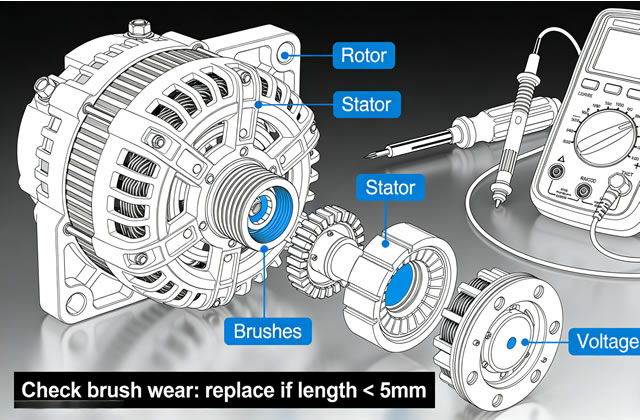
- Stator and Rotor: The stator (stationary winding) and rotor (rotating winding) are the core electrical components that generate electricity. The rotor creates a rotating magnetic field, while the stator converts this into alternating current (AC).
- Bearings: Support the rotating shaft of the alternator, reducing friction and ensuring smooth operation. Jenbacher alternators typically use high-grade roller or ball bearings.
- Brush Assembly (where applicable): Transfers electrical current to the rotor’s slip rings (for wound rotor designs). Modern Jenbacher alternators may use brushless designs, but older models require brush maintenance.
- Cooling System: Includes fans, heat exchangers, or liquid cooling circuits to regulate the alternator’s operating temperature and prevent overheating.
- Slip Rings and Insulators: For wound rotor alternators, slip rings provide a continuous electrical connection to the rotating rotor, while insulators prevent short circuits.
- Voltage Regulator: Maintains stable output voltage by adjusting the rotor’s excitation current, ensuring compliance with grid or load requirements.
2. Preventive Maintenance Schedule
Preventive maintenance is the cornerstone of Jenbacher alternator reliability. Below is a recommended schedule aligned with Jenbacher’s OEM guidelines, categorized by frequency:
| Frequency | Maintenance Tasks | Target Components |
|---|---|---|
| Daily/Before Startup | Visual inspection for leaks, loose connections, or abnormal noise; check cooling system fluid levels (if liquid-cooled); verify voltage output | Entire alternator, cooling system, electrical connections |
| Weekly | Clean external surfaces of dust/debris; check bearing temperature (max 80°C); inspect fan blades for damage; tighten loose fasteners | Casing, bearings, cooling fan, fasteners |
| Monthly | Test voltage regulator performance; inspect brush wear (if fitted); check insulation resistance of stator/rotor windings; lubricate bearings (if greaseable) | Voltage regulator, brush assembly, windings, bearings |
| Quarterly | Inspect slip rings for wear/corrosion; clean cooling system heat exchangers; check alignment of alternator and engine coupling; test grounding continuity | Slip rings, cooling system, coupling, grounding system |
| Annually/5000 Operating Hours | Complete disassembly (if required); replace worn bearings; recondition slip rings; perform full winding insulation test; calibrate voltage regulator | Bearings, slip rings, windings, voltage regulator |
| 5-Year/25000 Operating Hours | Replace stator/rotor windings (if insulation degradation is detected); overhaul cooling system; verify shaft runout and alignment | Windings, cooling system, rotor shaft |
3. Detailed Maintenance Procedures for Critical Parts
3.1 Stator and Rotor Maintenance
The stator and rotor windings are vulnerable to insulation damage from heat, moisture, and contamination. Follow these steps to maintain their integrity:
- **Inspection**: Visually check for discoloration (sign of overheating), cracks in insulation, or loose winding connections. Use a megohmmeter to test insulation resistance (minimum 1 MΩ at 500V DC for Jenbacher alternators).
- **Cleaning**: Remove dust, oil, or debris using compressed air (max pressure 2 bar) or a soft brush. Avoid high-pressure air that could damage insulation.
- **Repair**: If insulation damage is found, use Jenbacher-approved epoxy resin or insulation tape to repair small defects; replace windings for severe damage.
3.2 Bearing Maintenance
Bearings are a common failure point if neglected. Proper lubrication and inspection are critical:
- **Lubrication**: Use only Jenbacher OEM-specified grease (e.g., Mobil SHC 100 or equivalent). For greaseable bearings, apply grease in small quantities (1-2 shots) monthly, and purge old grease to prevent contamination.
- **Inspection**: Monitor bearing temperature (normal operating temp: 40-70°C); abnormal heat indicates insufficient lubrication or wear. Check for excessive vibration or noise, which signal bearing damage.
- **Replacement**: Replace bearings if play exceeds 0.05mm (measured with a dial indicator) or if lubricant is contaminated with metal particles.
3.3 Brush and Slip Ring Maintenance (Wound Rotor Models)
- **Brush Inspection**: Check brush wear (replace if length is less than 50% of new size); ensure brushes move freely in their holders and make full contact with slip rings (contact area ≥ 80%).
- **Slip Ring Care**: Clean slip rings with a lint-free cloth soaked in isopropyl alcohol to remove carbon deposits. Check for uneven wear (max allowable runout: 0.02mm) and re-machine if necessary.
- **Spring Tension**: Verify brush spring tension (30-40 N for Jenbacher alternators) to ensure consistent contact; replace springs if tension is reduced.
3.4 Cooling System Maintenance
Overheating is a leading cause of alternator failure. Maintain the cooling system as follows:
- Clean fan blades and heat exchangers monthly to remove dust, which reduces cooling efficiency.
- For liquid-cooled alternators, check coolant level and concentration (50/50 ethylene glycol/water) quarterly; replace coolant every 2 years.
- Inspect cooling hoses for cracks or leaks; replace if damaged to prevent coolant loss.
4. Common Issues and Troubleshooting
Even with proactive maintenance, Jenbacher alternator parts may develop issues. Below are common problems and their solutions:
- Low Output Voltage: Check voltage regulator calibration, rotor excitation current, or brush/slip ring contact; replace faulty voltage regulator if needed.
- Excessive Vibration: Inspect coupling alignment, bearing wear, or rotor imbalance; realign coupling or replace bearings.
- Bearing Overheating: Check lubrication level/type, shaft misalignment, or seal damage; re-lubricate or replace bearings.
- Insulation Failure: Caused by moisture, overheating, or contamination; repair insulation or replace windings, and address root cause (e.g., fix cooling system leaks).
5. Long-Term Care and Best Practices
To extend the service life of Jenbacher alternator parts beyond the standard maintenance schedule, implement these additional practices:
- Store spare parts (bearings, brushes, gaskets) in a clean, dry environment to prevent corrosion or contamination.
- Monitor operating conditions (load, temperature, voltage) continuously using Jenbacher’s control system (e.g., JENBACHER® EMOS) to detect anomalies early.
- Use only Jenbacher OEM replacement parts to ensure compatibility and performance; non-OEM parts may lead to premature failure.
- Conduct annual performance audits to compare alternator output, efficiency, and component condition against baseline data.
- Train maintenance teams on the latest Jenbacher alternator maintenance techniques and updates to OEM guidelines.
In conclusion, Jenbacher alternator parts require a combination of regular preventive maintenance, targeted component care, and adherence to OEM specifications to ensure reliable operation. By following the procedures outlined in this guide, operators can minimize downtime, reduce repair costs, and maximize the lifespan of their Jenbacher alternator systems.

