





1. Introduction to Jenbacher Stator
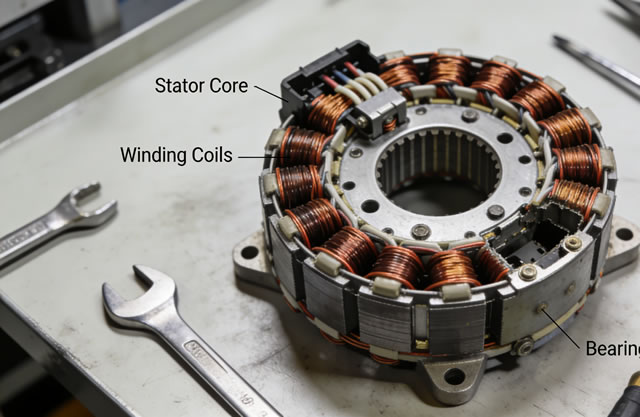
The Jenbacher stator is a core component of Jenbacher gas engines, responsible for generating the magnetic field necessary for electricity production. As a stationary part of the electric generator system, it plays a critical role in ensuring the engine's efficiency, reliability, and longevity. Proper maintenance of the stator is essential to prevent unplanned downtime, reduce repair costs, and maintain optimal performance of Jenbacher engines across various applications (e.g., power generation plants, industrial facilities, cogeneration systems).
Neglecting stator maintenance can lead to issues such as insulation degradation, winding damage, overheating, and ultimately, complete stator failure – which can result in significant operational losses and expensive replacements. This guide outlines a structured approach to Jenbacher stator maintenance, covering preventive, predictive, and corrective maintenance practices.
2. Preventive Maintenance Practices
2.1 Regular Inspection Schedule
Preventive maintenance is the foundation of stator care, focused on identifying and addressing potential issues before they escalate. Below is a recommended inspection frequency based on engine operating hours:
| Inspection Type | Frequency | Key Checkpoints |
|---|---|---|
| Daily Visual Check | Every operational day | External damage, oil/coolant leaks, abnormal noise/vibration, temperature anomalies |
| Weekly Inspection | Every 50-100 operating hours | Insulation resistance, connection tightness, cooling system flow, dust/debris accumulation |
| Monthly Maintenance | Every 500 operating hours | Winding temperature analysis, air gap measurement, bolt torque verification |
| Annual Overhaul | Every 8,000-10,000 operating hours | Full disassembly (if needed), insulation testing, core loss measurement, winding integrity check |
2.2 Cleaning Procedures
Contamination (dust, oil, moisture, carbon deposits) is one of the primary causes of stator degradation. Follow these steps for safe and effective cleaning:
- Ensure the engine is completely shut down, locked out, and tagged out (LOTO) to prevent accidental startup.
- Remove loose debris using a soft-bristle brush (avoid metal brushes that can scratch insulation).
- Use low-pressure compressed air (maximum 2 bar) to blow out dust from winding gaps and cooling channels – direct air flow parallel to windings to avoid damaging insulation.
- For oil/grease deposits, use a Jenbacher-approved solvent (e.g., Jenbacher Cleaner J-SC 200) and lint-free cloths; avoid harsh chemicals that degrade insulation materials.
- After cleaning, dry the stator thoroughly (using forced air at < 40°C) to eliminate moisture before reassembly/operation.
2.3 Insulation Maintenance
Stator winding insulation is critical for preventing short circuits and electrical failures. Key maintenance steps:
- Test insulation resistance using a megohmmeter (500V or 1000V) – ensure readings meet Jenbacher OEM specifications (minimum 10 MΩ at 25°C).
- Inspect for cracks, fraying, or discoloration of insulation – repair minor damage with Jenbacher-approved epoxy resin; replace severely damaged windings.
- Apply anti-corrosion coating to metal parts of the stator (per Jenbacher guidelines) to prevent rust and degradation.
3. Predictive Maintenance Techniques
Predictive maintenance uses advanced monitoring to detect early signs of stator deterioration, allowing for planned repairs before failure occurs:
- Thermographic Imaging: Use infrared cameras to identify hot spots in the stator windings – hot spots indicate poor connections, insulation breakdown, or overloading. Conduct thermal scans quarterly and compare results to baseline data.
- Vibration Analysis: Monitor stator vibration levels using accelerometers – abnormal vibration may signal misalignment, loose components, or core damage. Analyze vibration spectra to pinpoint root causes.
- Partial Discharge (PD) Testing: PD testing detects insulation defects before they cause failures – perform this test annually or after major maintenance. Jenbacher recommends using OEM-certified PD testing equipment for accurate results.
- Oil Analysis: If the stator is oil-cooled, analyze oil samples for metal particles, moisture, and acidity – abnormal levels indicate internal wear or leakage.
Important Safety Notes
- All maintenance activities must be performed by trained and certified Jenbacher technicians.
- Always follow Jenbacher’s Safety Manual (Document No. JSM-001) and local electrical safety regulations.
- Never perform maintenance on a live stator – ensure full electrical isolation and ground connection.
- Use only Jenbacher OEM replacement parts and approved chemicals to avoid voiding warranty and compromising performance.
4. Corrective Maintenance for Common Stator Issues
4.1 Common Failure Modes and Remedies
| Issue | Cause | Corrective Action |
|---|---|---|
| Insulation Breakdown | Moisture, overheating, chemical contamination | Replace damaged insulation; repair winding with OEM materials; improve cooling/ sealing to prevent recurrence |
| Winding Short Circuit | Insulation damage, rodent infestation, mechanical impact | Identify and repair shorted windings; install rodent barriers; inspect for mechanical damage |
| Core Losses (Overheating) | Core laminations separation, eddy currents | Reseat laminations with epoxy; test core loss; replace core if losses exceed OEM limits |
| Cooling System Blockage | Dust/debris accumulation, scale buildup | Flush cooling channels with approved cleaner; replace filters; optimize air/oil flow |
4.2 Post-Repair Verification
After corrective maintenance, perform the following checks to ensure stator functionality:
- Conduct insulation resistance and continuity tests to confirm no electrical faults.
- Perform a test run at low load (20-30% of rated capacity) for 1 hour, monitoring temperature, vibration, and noise.
- Document all repairs, test results, and replacement parts in the engine’s maintenance log (per Jenbacher record-keeping standards).
5. Best Practices for Long-Term Stator Performance
- Maintain a clean operating environment to minimize dust, moisture, and chemical exposure to the stator.
- Operate the Jenbacher engine within OEM-specified load and temperature limits to avoid stator stress.
- Train maintenance staff regularly on Jenbacher stator care updates and safety protocols.
- Keep a complete inventory of critical stator spare parts (e.g., insulation kits, gaskets, cooling fans) to reduce downtime in case of failure.
- Review maintenance records quarterly to identify trends (e.g., recurring contamination issues) and adjust maintenance plans accordingly.
6. Conclusion
Effective maintenance of the Jenbacher stator is a critical investment in the reliability and efficiency of Jenbacher gas engines. By combining consistent preventive maintenance, data-driven predictive techniques, and prompt corrective action, operators can extend stator lifespan by 30-50% and significantly reduce unplanned downtime. Always adhere to Jenbacher’s OEM guidelines and work with certified technicians to ensure compliance with safety standards and optimal stator performance.

