






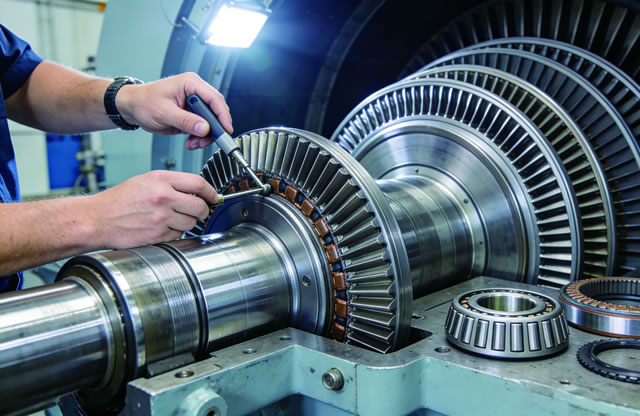
Applicable Models: Jenbacher J312, J412, J612, JMS 320/420/620 Series Gas Engine Rotors
Document Purpose: To outline standardized procedures for inspecting, maintaining, repairing, and preserving Jenbacher rotors to ensure optimal performance, extend service life, and minimize unplanned downtime.
1. Fundamental Principles of Jenbacher Rotor Maintenance
Jenbacher rotors are critical rotating components in gas engines, responsible for converting mechanical energy into electrical power. Their performance directly impacts engine efficiency, emissions, and operational safety. Maintenance activities must adhere to Jenbacher OEM specifications and industry safety standards (e.g., ISO 14001, OSHA 29 CFR 1910).
Key maintenance objectives:
- Prevent premature wear of rotor surfaces and bearings
- Maintain rotor balance to avoid vibration-induced damage
- Ensure seal integrity to prevent gas leakage
- Detect cracks, corrosion, or deformation at early stages
2. Routine Inspection Procedures
2.1 Daily Visual Inspection
Step 1: Check for visible signs of oil leakage around rotor bearings and seals.
Step 2: Inspect rotor housing for abnormal noise, excessive vibration, or overheating (use infrared thermometer to measure surface temperature; normal operating temp: 60-80°C).
Step 3: Verify rotor alignment indicators (if equipped) for misalignment warnings.
2.2 Weekly Detailed Inspection
| Inspection Item | Acceptance Criteria | Testing Method |
|---|---|---|
| Rotor runout | ≤ 0.05 mm (total indicator reading) | Dial indicator measurement |
| Bearing clearance | 0.02-0.04 mm (radial) | Feeler gauge |
| Surface corrosion | No pitting > 0.1 mm depth | Visual + ultrasonic thickness gauge |
| Bolt torque | Per Jenbacher OEM specs (typically 85-95 N·m) | Torque wrench |
2.3 Monthly Non-Destructive Testing (NDT)
Perform the following NDT checks to detect hidden defects:
- Magnetic Particle Inspection (MPI) for surface cracks on steel rotor components
- Ultrasonic Testing (UT) for internal defects in rotor shafts
- Liquid Penetrant Testing (LPT) for small surface fissures in aluminum alloy rotors
3. Cleaning & Lubrication
3.1 Rotor Cleaning
Frequency: Every 3 months or after 500 operating hours (whichever comes first)
- Remove rotor from housing (follow Jenbacher disassembly manual)
- Clean surface contaminants (oil, carbon deposits, dust) with Jenbacher-approved solvent (Part No. JEN-00892)
- Use soft-bristle brushes to avoid scratching rotor surfaces; avoid high-pressure water jets (max pressure: 20 bar)
- Dry rotor completely with compressed air (moisture-free, 4-6 bar) before reassembly
3.2 Lubrication Guidelines
Only use Jenbacher OEM-recommended lubricants to avoid compatibility issues:
- Bearing lubrication: Jenbacher Synthetic High-Temp Grease (JEN-1045), refill every 1,000 operating hours
- Shaft seal lubrication: Jenbacher Silicone Lubricant (JEN-2031), apply thin film before reassembly
- Lubrication method: Grease gun with precision nozzle (avoid over-greasing, which causes overheating)
4. Repair & Replacement Criteria
4.1 Repair Eligibility
Repair is acceptable if defects meet the following criteria:
- Surface scratches ≤ 0.2 mm depth (can be polished with 400-grit emery cloth)
- Minor corrosion (pitting ≤ 0.1 mm) (treat with anti-corrosion coating JEN-3012)
- Bearing clearance up to 0.06 mm (recondition with shims)
4.2 Mandatory Replacement
Replace rotor immediately if any of the following conditions are found:
- Cracks > 5 mm in length (detected via MPI/UT)
- Rotor imbalance > 0.5 g·mm/kg (exceeds ISO 1940 G2.5 standard)
- Shaft deformation > 0.1 mm/m
- Seal damage leading to gas leakage > 500 ppm
- Reached maximum service life (typically 20,000 operating hours for Jenbacher rotors)
5. Preventive Maintenance Schedule
| Maintenance Task | Frequency | Responsible Team | Documentation Requirement |
|---|---|---|---|
| Visual inspection + vibration check | Daily | Operations Team | Log in Shift Report |
| Detailed mechanical inspection | Weekly | Maintenance Team | Jenbacher Rotor Inspection Form |
| Cleaning + lubrication | Quarterly | Maintenance Team | Lubrication Log |
| NDT testing | Monthly | Certified NDT Technicians | NDT Report with OEM approval |
| Full rotor overhaul | Every 5,000 operating hours | Jenbacher Authorized Service Partner | Overhaul Certificate |
6. Post-Maintenance Verification
After completing maintenance/repair/replacement, perform the following verification steps:
- Recheck rotor alignment (tolerance: ±0.02 mm)
- Conduct a no-load test run (15 minutes) to monitor vibration (≤ 2.8 mm/s RMS)
- Measure oil temperature (normal range: 70-90°C) and pressure (2.5-3.5 bar)
- Verify no gas leakage (using gas detector, limit: < 100 ppm)
- Document all test results in the Jenbacher Maintenance Record System
7. Storage & Handling of Spare Rotors
For spare Jenbacher rotors, follow these storage rules to prevent damage:
- Store in a dry, temperature-controlled environment (15-25°C, humidity < 60%)
- Keep rotors on dedicated storage racks (avoid direct contact with concrete floors)
- Apply rust inhibitor (JEN-4005) to exposed metal surfaces every 6 months
- Rotate spare rotors in storage every 12 months to prevent permanent deformation
- Use certified lifting equipment (crane with soft slings) for rotor handling

