

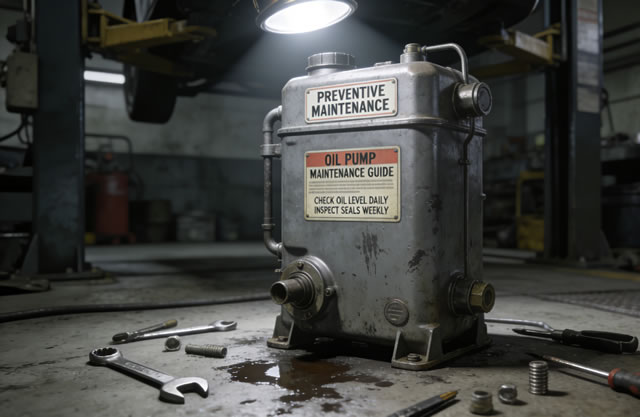
Best Practices for Optimal Performance and Longevity
1. Introduction to Jenbacher Oil Pumps
Jenbacher oil pumps are critical components in Jenbacher gas engine systems, responsible for delivering pressurized lubricating oil to engine moving parts including crankshaft bearings, camshafts, and piston pins. Proper maintenance of these pumps is essential to prevent engine damage, minimize downtime, and ensure compliance with Jenbacher's operational standards. This guide outlines the complete maintenance, inspection, and repair procedures for all Jenbacher oil pump models (including Type 2, Type 3, Type 4, and Type 6).
2. Preventive Maintenance Schedule
| Maintenance Task | Frequency | Applicable Models | Key Objective |
|---|---|---|---|
| Visual inspection of pump housing | Every 500 operating hours | All models | Detect leaks, cracks, or loose fasteners |
| Oil pressure testing | Every 1000 operating hours | All models | Verify pump output meets manufacturer specs |
| Filter replacement | Every 2000 operating hours or 6 months | All models | Prevent contamination of lubrication system |
| Complete pump disassembly & inspection | Every 8000 operating hours or 2 years | Type 3/4/6 | Check wear on gears, bearings, and seals |
| Seal replacement | Every 4000 operating hours or 1 year | All models | Prevent oil leakage and contamination |
3. Routine Maintenance Procedures
3.1 Visual Inspection
- Shut down the engine and allow it to cool to ambient temperature.
- Remove any protective covers from the oil pump assembly.
- Inspect the pump housing for signs of oil leakage, corrosion, or physical damage.
- Check all mounting bolts and fasteners for tightness (torque specifications: 28 Nm for M8 bolts, 45 Nm for M10 bolts).
- Inspect the oil inlet/outlet connections for cracks or loose fittings.
- Verify that the pump drive belt (if equipped) has proper tension (deflection of 10-15mm under 10kg force) and no signs of wear.
3.2 Oil Pressure Testing
- Install a calibrated pressure gauge on the oil pump's test port (located on the discharge side).
- Start the engine and let it reach normal operating temperature (80-90°C).
- Record the oil pressure at idle (minimum 1.8 bar) and at rated speed (minimum 4.5 bar).
- Compare readings to Jenbacher's technical specifications for your pump model.
- If pressure is below specifications, check for clogged filters, worn pump gears, or faulty pressure relief valves.
- Shut down the engine and remove the pressure gauge; reinstall the test port plug with a new gasket.
3.3 Oil Filter Replacement
- Place a drain pan under the oil filter housing to catch residual oil.
- Use a filter wrench to remove the old filter cartridge.
- Clean the filter mounting surface with a lint-free cloth to remove any debris or old gasket material.
- Apply a thin layer of fresh engine oil to the gasket of the new filter (use only Jenbacher-approved oil: JENBACHER J-OIL 800).
- Install the new filter by hand until the gasket makes contact with the mounting surface, then tighten an additional 3/4 turn.
- Refill the engine with the recommended amount of oil and check for leaks after starting the engine.
4. Major Repair Procedures
4.1 Complete Pump Disassembly
- Disconnect the negative battery terminal to prevent accidental engine start-up.
- Drain the engine oil into an approved collection container (follow local environmental regulations).
- Disconnect the oil inlet and outlet hoses from the pump; cap the lines to prevent contamination.
- Remove the pump from the engine mounting bracket (mark all electrical connections for proper reassembly).
- Secure the pump in a vice (use soft jaws to avoid damage to the housing).
- Remove the pump cover bolts and separate the cover from the main housing.
- Extract the drive gear, driven gear, and bearing assembly from the housing.
- Remove the pressure relief valve and spring from the side of the pump body.
4.2 Component Inspection & Replacement
- Gear Inspection: Check gear teeth for wear, pitting, or chipping. Replace gears if tooth thickness is reduced by more than 0.2mm or if any damage is present.
- Bearing Inspection: Check radial and axial play of bearings (maximum allowable play: 0.15mm). Replace bearings if play exceeds limits or if there is evidence of scoring.
- Seal Inspection: Replace all O-rings and shaft seals (use only OEM Jenbacher parts: Part No. 123456 for main shaft seal).
- Pressure Relief Valve: Clean the valve and spring; check for sticking or corrosion. Replace if valve does not seat properly.
- Housing Inspection: Check for cracks, excessive wear in gear bores, or damaged mounting surfaces. Machine or replace housing if necessary.
4.3 Reassembly & Installation
- Clean all components with solvent and dry thoroughly (avoid compressed air on bearings).
- Lubricate all moving parts with fresh Jenbacher J-OIL 800 before reassembly.
- Install the pressure relief valve and spring; torque the retaining bolt to 18 Nm.
- Fit the driven gear and drive gear into the housing (ensure proper meshing).
- Install the pump cover with a new gasket; torque cover bolts evenly to 22 Nm in a crisscross pattern.
- Mount the pump back onto the engine; ensure proper alignment with the drive mechanism.
- Reconnect oil hoses with new gaskets and torque fittings to manufacturer specifications.
- Reconnect all electrical connections (refer to marking made during disassembly).
- Refill the engine with the correct grade and quantity of Jenbacher-approved oil.
5. Post-Repair Testing & Validation
After completing maintenance or repair, perform the following validation steps to ensure proper pump operation:
- Prime the oil pump by turning the engine over manually (without starting) 5-10 times to build initial pressure.
- Start the engine and monitor oil pressure for the first 5 minutes of operation.
- Check for oil leaks at all connections and pump seals.
- Run the engine at varying speeds (idle to rated speed) and verify stable oil pressure.
- Perform a leak-down test to ensure no pressure loss in the lubrication system.
- Document all test results in the engine maintenance log (include date, hours of operation, pressure readings, and parts replaced).
6. Troubleshooting Common Issues
| Symptom | Possible Cause | Recommended Solution |
|---|---|---|
| Low oil pressure | Worn pump gears, clogged filter, faulty relief valve | Replace worn gears, clean/replace filter, inspect/replace relief valve |
| Oil leakage from pump | Damaged seals, loose bolts, cracked housing | Replace seals, retorque bolts, inspect/replace housing |
| Pump noise/vibration | Misaligned drive, worn bearings, gear damage | Realign drive, replace bearings, inspect/replace gears |
| Pump fails to build pressure | Air in system, broken drive gear, blocked inlet | Bleed air from system, replace drive gear, clean inlet strainer |
7. Safety & Compliance
All maintenance and repair activities on Jenbacher oil pumps must comply with:
- Jenbacher Service Manual (Document No. JEN-SM-0087)
- OSHA Machinery Safety Standards (29 CFR 1910.212)
- Local environmental regulations for oil disposal
- Lockout/Tagout (LOTO) procedures for energy isolation