










The camshaft is the mechanical heart of MWM diesel engines, responsible for controlling valve opening/closing timing, ensuring optimal combustion, engine power output, and fuel efficiency. MWM camshafts are engineered for heavy-duty industrial, marine, and power generation applications, but they require consistent, specialized maintenance to avoid premature wear, failure, and costly engine downtime.
This complete guide covers routine inspection, preventive maintenance, common failure diagnosis, professional repair procedures, and storage best practices for MWM camshafts—designed for technicians, fleet managers, and engine maintenance professionals.
1. Core Function & Importance of MWM Camshafts
MWM camshafts operate under extreme mechanical stress, with lobes that directly actuate valve lifters, pushrods, and rocker arms. Key responsibilities include:
- Regulating precise intake/exhaust valve timing for maximum engine performance
- Withstanding continuous friction, high RPM, and thermal stress
- Maintaining alignment with crankshaft, timing gears, and timing chains/belts
- Supporting MWM engine reliability in 24/7 industrial and marine operations
Critical Note: Even minor camshaft damage can cause valve misalignment, power loss, increased fuel consumption, or catastrophic engine seizure.
2. Routine Maintenance: Preventive Care for MWM Camshafts
Preventive maintenance is the most effective way to extend MWM camshaft service life and avoid unexpected failures. Follow this scheduled maintenance protocol:
2.1 Daily/Pre-Operation Inspection
- Check engine oil pressure and level (low oil pressure directly damages camshaft lobes and bearings)
- Listen for abnormal noises: ticking, tapping, or grinding sounds indicate camshaft/lifter wear
- Monitor engine performance: rough idling, reduced power, or smoke signals valve timing issues
2.2 Scheduled Oil & Lubrication Maintenance
Lubrication is the single most important factor for camshaft longevity:
- Use only MWM-recommended high-performance diesel engine oil (API CK-4 or higher)
- Replace engine oil and oil filter at MWM-specified intervals (every 250–500 operating hours)
- Flush the lubrication system annually to remove sludge, metal particles, and contaminants
- Inspect oil passages for clogs—blocked oil flow causes instant camshaft wear
2.3 Periodic Visual & Mechanical Inspection
Perform every 1,000–2,000 operating hours or during engine overhauls:
- Remove valve cover and inspect camshaft lobes for pitting, scoring, or uneven wear
- Measure camshaft lobe lift and journal diameter using precision calipers/micrometers
- Check camshaft bearings for excessive clearance or wear
- Verify timing gear/chain tension and alignment with the camshaft
- Inspect lifters (tappets) for wear—worn lifters accelerate camshaft damage
3. Common MWM Camshaft Failures & Root Causes
Early detection of camshaft issues reduces repair costs and engine downtime. Below are the most frequent failures and their causes:
3.1 Camshaft Lobe Wear & Scoring
Symptoms: Tapping noise, reduced engine power, misfiring
Causes: Insufficient lubrication, contaminated oil, worn lifters, abrasive particles in oil
3.2 Camshaft Bearing Failure
Symptoms: Low oil pressure, knocking noises, engine overheating
Causes: Oil starvation, misaligned bearings, excessive crankshaft vibration, metal fatigue
3.3 Camshaft Bent/Broken Lobes
Symptoms: Complete valve failure, engine stalling, severe mechanical noise
Causes: Over-revving, valve collision, improper installation, material defects
3.4 Timing Misalignment
Symptoms: Poor combustion, black smoke, hard starting
Causes: Worn timing gears, stretched timing chains, loose camshaft sprockets
WARNING: If you detect lobe wear or bearing damage, stop engine operation immediately—continued use will destroy the entire valvetrain.
4. Professional MWM Camshaft Repair & Overhaul Procedures
MWM camshaft repair requires specialized tools, precision machining, and adherence to OEM standards. Only certified technicians should perform these services:
4.1 Camshaft Removal Protocol
- Disconnect battery, drain engine oil, and remove timing cover/valve components
- Mark timing components for proper reinstallation alignment
- Loosen and remove camshaft retaining bolts/sprockets
- Carefully extract camshaft to avoid damaging engine block or bearings
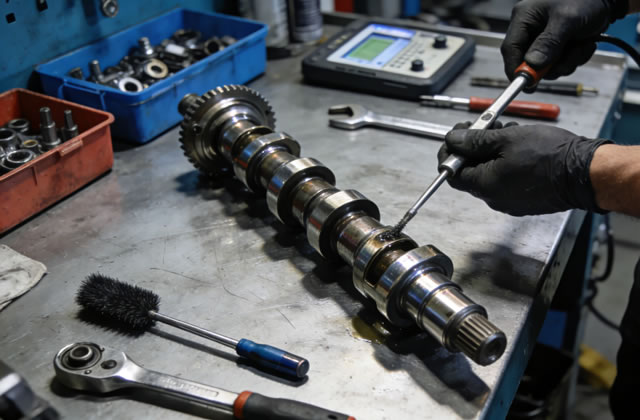
4.2 Inspection & Testing
- Magnetic particle testing to detect hidden cracks in lobes and journals
- Micrometer measurement of lobe height and journal diameter (compare to MWM OEM specs)
- Check for straightness using a dial indicator
- Inspect splines/gear teeth for chipping or wear
4.3 Repairable vs. Replaceable Conditions
Repairable: Minor lobe wear, light scoring, small surface imperfections
Replace Required: Deep scoring, bent shaft, cracked lobes, excessive journal wear, broken gear teeth
4.4 Professional Camshaft Refinishing
Qualified repair shops perform:
- Camshaft grinding to restore lobe profile and journal dimensions
- Polishing to achieve OEM-specified surface smoothness
- Heat treatment (hardening) to restore wear resistance
- Bearing replacement and precision fitting
4.5 Reinstallation & Calibration
- Lubricate camshaft lobes and bearings with high-pressure assembly lubricant
- Align camshaft with timing marks exactly per MWM service manual
- Torque all fasteners to OEM specifications
- Prime the lubrication system before starting the engine
- Run engine at idle for 30+ minutes to verify proper operation
5. Long-Term Durability: Best Practices for MWM Camshafts
Maximize camshaft lifespan and reduce maintenance costs with these industry-proven practices:
- Always use genuine MWM replacement parts for repairs and overhauls
- Avoid engine overloading and over-revving beyond MWM operational limits
- Install high-quality oil filters to trap abrasive contaminants
- Train maintenance staff on proper camshaft handling and installation
- Keep detailed maintenance records to track wear patterns and schedule service
- For standby generators, perform monthly test runs to maintain lubrication
6. Storage & Preservation for Unused MWM Camshafts
Improper storage ruins new or refurbished camshafts. Follow these guidelines:
- Clean and coat entire camshaft with anti-corrosion lubricant
- Wrap in moisture-resistant, non-abrasive material
- Store horizontally on padded racks (never vertically or on hard surfaces)
- Maintain a dry, temperature-controlled environment (50–77°F / 10–25°C)
- Inspect stored camshafts every 6 months for corrosion or damage
Conclusion
The MWM camshaft is a precision component that demands consistent care, high-quality lubrication, and professional repair services. By following the maintenance and repair protocols outlined in this guide, you can ensure maximum camshaft lifespan, reliable engine performance, and minimal operational downtime.
Always refer to your MWM engine official service manual for model-specific specifications and always use certified technicians for camshaft removal, repair, and installation.


