










The MWM crankshaft is a core precision component of MWM diesel engines, widely applied in marine, generator sets, industrial power, construction machinery, and automotive fields. As the heart of the engine’s power transmission system, the crankshaft converts linear piston motion into rotational power, bearing huge periodic loads, impact forces, and torsional stress during operation. Any minor damage or wear to the crankshaft will directly lead to engine performance degradation, abnormal noise, oil leakage, power loss, and even catastrophic engine failure.
This professional guide covers full-cycle maintenance, fault diagnosis, standard repair procedures, long-term protection, and storage requirements for MWM crankshafts. It is suitable for professional technicians, maintenance teams, equipment managers, and engineering personnel to ensure stable operation, extended service life, and reduced downtime of MWM engines.
1. Core Structure & Working Principle of MWM Crankshaft
MWM crankshafts are manufactured with high-strength forged alloy steel or ductile cast iron, featuring strict heat treatment, precision machining, and dynamic balance calibration. The key components include:
- Main Journals: Supported by engine main bearings, fixed on the engine cylinder block, withstand radial loads
- Connecting Rod Journals: Connected with engine connecting rods, transfer power from pistons
- Crank Webs & Counterweights: Balance inertial force and torque, reduce vibration and noise
- Front & Rear Ends: Install timing gears, flywheel, oil seals, and power output components
- Internal Oil Passages: Deliver lubricating oil to journals and bearings for friction reduction and cooling
During engine operation, the crankshaft bears alternating stress, high-speed rotation, and continuous friction. Strict maintenance is essential to avoid fatigue fracture, journal wear, oil leakage, and bearing burnout.
2. Routine Maintenance of MWM Crankshaft (Daily & Regular Inspection)
Routine maintenance is the most effective way to prevent serious crankshaft failures. All MWM engine users must implement standardized inspection procedures.
2.1 Daily Inspection Items
- Check engine oil pressure, level, color, and viscosity; abnormal oil (metal debris, emulsification, blackening) indicates potential crankshaft wear
- Listen for abnormal knocking, rattling, or scraping noise from the engine cylinder block; continuous metal impact noise means crankshaft or bearing damage
- Inspect front and rear oil seals for oil leakage; severe leakage causes insufficient lubrication and crankshaft wear
- Monitor engine vibration, temperature, and power output; abnormal performance requires immediate shutdown inspection
2.2 Regular Maintenance (Every 500/1000/2000 Operating Hours)
- Replace engine oil and oil filter with MWM-specified lubricants to ensure sufficient lubrication for crankshaft journals
- Clean oil passages and remove sludge, carbon deposits, and metal particles to prevent blockage
- Check main bearing and connecting rod bearing clearance with professional measuring tools
- Inspect crankshaft axial movement (end play); out-of-tolerance values require bearing replacement
- Calibrate crankshaft dynamic balance to avoid fatigue damage caused by excessive vibration
3. Common Faults & Diagnosis of MWM Crankshaft
Early and accurate fault diagnosis avoids secondary damage and reduces repair costs. The most common failures are as follows:
3.1 Journal Wear & Scuffing
Causes: Insufficient lubrication, dirty oil, bearing failure, foreign particles, overload operation
Symptoms: Low oil pressure, abnormal noise, engine power loss, metal particles in engine oil
Diagnosis: Disassemble engine and measure journal diameter, roundness, and cylindricity with micrometers
3.2 Crankshaft Fatigue Cracking
Causes: Long-term overload, material fatigue, unbalanced operation, improper heat treatment
Symptoms: Increasing engine vibration, sudden power drop, severe cracking leads to engine seizure
Diagnosis: Magnetic particle inspection (MPI) or ultrasonic testing to detect micro-cracks
3.3 Axial & Radial Runout Out of Tolerance
Causes: Bearing wear, loose fasteners, improper assembly, impact load
Symptoms: Oil seal leakage, uneven bearing wear, unstable engine operation
Diagnosis: Use dial indicator to measure runout values and compare with MWM factory standards
3.4 Oil Passage Blockage & Oil Leakage
Causes: Sludge accumulation, oil seal aging, loose bearing caps
Symptoms: Insufficient lubrication, local overheating, oil leakage at both ends
Diagnosis: Pressure test oil passages and inspect sealing components
4. Professional Repair & Overhaul Process for MWM Crankshaft
MWM crankshaft repair must follow OEM standards and be performed by certified technicians. Below is the complete standardized overhaul workflow:
4.1 Disassembly & Cleaning
- Disassemble engine in order: remove flywheel, timing parts, bearings, connecting rods, and take out crankshaft
- Clean with professional detergent to remove oil sludge, carbon deposits, and rust; flush internal oil passages
- Mark all components to ensure correct reassembly position
4.2 Precision Detection
- Measure journal diameter, roundness, cylindricity, taper, and surface roughness
- Check dynamic balance, axial runout, and radial runout
- Non-destructive testing (MPI/ultrasonic) for cracks and internal defects
- Record all data and compare with MWM original factory parameters
4.3 Standard Repair Methods
1. Journal Grinding & Polishing
Use high-precision crankshaft grinding machine to restore journal size and surface finish; apply polishing to reduce friction coefficient.
2. Spray Welding & Chrome Plating
For slightly worn journals, use spray welding, electroplating, or laser cladding to restore dimensions; only approved processes are allowed.
3. Crack Repair
Micro-cracks can be repaired by professional welding; large cracks require crankshaft replacement (no compromise allowed).
4. Oil Passage Restoration
Clean and unblock oil passages; repair damaged threads and sealing surfaces.
4.4 Reassembly & Commissioning
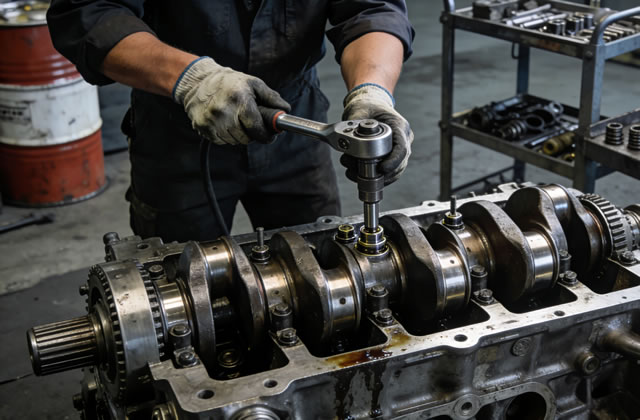
- Install new genuine MWM main bearings and connecting rod bearings with correct torque
- Lubricate all journals before assembly; adjust axial clearance to standard range
- Reassemble engine components in reverse order and perform dynamic balance test
- Run test engine, check oil pressure, noise, vibration, and temperature; confirm no oil leakage
5. Long-Term Protection & Life Extension Measures
After repair or overhaul, proper protection can extend the MWM crankshaft service life to 15,000+ operating hours.
- Use only MWM-recommended high-grade diesel engine oil and replace it on time
- Avoid engine overload, cold start high-speed operation, and sudden acceleration
- Install high-quality oil filters and fuel filters to prevent particle contamination
- Maintain normal engine temperature and oil pressure; avoid overheating
- Record operating hours and maintenance history for predictive maintenance
- Regularly check bearing clearance and crankshaft runout to detect issues early
6. Storage Requirements for Unused / Spare MWM Crankshaft
Improper storage causes rust, deformation, and performance degradation before installation.
- Clean and apply anti-rust oil on all journal surfaces and oil passages
- Wrap with anti-rust paper and plastic film; store in dry, dust-free, ventilated environment
- Support both ends of crankshaft; avoid horizontal placement causing bending deformation
- Keep away from acid, alkali, moisture, and direct sunlight
- Inspect anti-rust condition every 3 months; re-apply anti-rust oil if needed
7. Safety Notes During Maintenance
- Always disconnect power and fuel supply before engine disassembly
- Use professional lifting tools for crankshaft handling; avoid collision and dropping
- Wear protective gear: gloves, goggles, work clothes
- Follow MWM official torque standards for bearing cap and fastener assembly
- Do not use repaired crankshaft with critical defects (large cracks, fracture, severe deformation)
Conclusion
The MWM crankshaft is a precision core component that determines the stability and service life of the entire engine. Scientific maintenance, timely fault diagnosis, standardized professional repair, and strict long-term protection are essential to ensure reliable operation.
By implementing the guidelines in this document, you can effectively reduce failure rates, lower maintenance costs, improve equipment availability, and maximize the performance and lifespan of MWM crankshafts in all operating conditions.
For complex faults or technical support, always contact authorized MWM service centers and professional engineering teams.

