






1. Introduction to MWM Flame Detector
MWM flame detectors are critical safety devices designed for industrial combustion systems, gas turbines, boilers, furnaces, and MWM generator sets. They monitor flame presence, stability, and integrity in real time, ensuring safe operation by triggering shutdowns if flame failure is detected.
Regular maintenance and professional repair are essential to maintain detection accuracy, extend service life, prevent false alarms, and avoid unexpected equipment downtime. This guide covers daily inspections, periodic maintenance, troubleshooting, repair procedures, and long-term care for all MWM flame detector models.
2. Safety Precautions Before Maintenance
- Isolate the flame detector from fuel gas and combustion systems to prevent accidental ignition
- Allow the detector and sensor assembly to cool down if operating recently
- Wear proper PPE: heat-resistant gloves, safety goggles, and protective clothing
- Follow site lockout/tagout (LOTO) procedures for all electrical disconnections
- Do not perform maintenance in explosive or flammable environments without proper certification
- Keep fire extinguishing equipment nearby during inspection and repair
3. Routine Daily & Weekly Inspection
Routine inspections help identify early signs of damage, contamination, or performance degradation. These checks take minimal time but significantly improve reliability.
3.1 Visual Inspection
- Check the detector housing for cracks, corrosion, physical damage, or water ingress
- Inspect the optical lens/sensor window for dirt, dust, oil, soot, or condensation
- Verify cable connections are tight, undamaged, and free of moisture
- Confirm indicator lights (power, flame detected, fault) are functioning normally
- Check mounting brackets for stability and alignment with the combustion chamber
3.2 Functional Check
- Monitor flame signal strength and compare with normal operating values
- Listen for abnormal noises or loose components inside the detector
- Verify no fault codes are present on the connected control panel
- Ensure the detector maintains a consistent flame reading during steady operation
4. Periodic Maintenance (Monthly & Quarterly)
Periodic maintenance prevents performance loss caused by environmental contamination and wear. Follow this schedule for optimal operation.
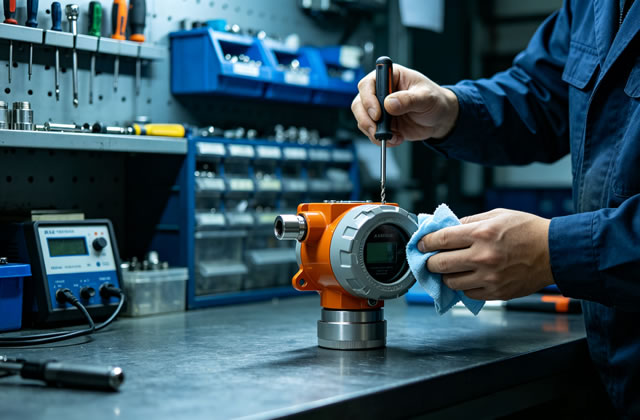
4.1 Cleaning Procedures
- Clean the optical lens/window with a soft, lint-free cloth and isopropyl alcohol (70% or higher)
- Remove dust, soot, and debris from the sensor chamber using low-pressure compressed air
- Clean the housing exterior with a mild detergent solution; avoid harsh chemicals
- Dry all components completely before restoring power
4.2 Electrical & Connection Maintenance
- Tighten all terminal block connections to manufacturer-specified torque
- Inspect wiring for fraying, overheating, or corrosion
- Check grounding connections for continuity and secure mounting
- Test cable insulation resistance to ensure no electrical leakage
4.3 Calibration Verification
- Compare current flame signal output with factory-calibrated values
- Verify response time when simulating flame on/off conditions
- Adjust sensitivity only if trained and authorized by MWM service guidelines
5. Semi-Annual & Annual Comprehensive Service
Every 6 to 12 months, perform a full overhaul to ensure long-term reliability, especially in harsh industrial environments.
- Disassemble the detector (per MWM service manual) and inspect internal components
- Replace worn gaskets, seals, and O-rings to prevent moisture intrusion
- Test sensor response under controlled flame conditions
- Update firmware if MWM has released new versions for improved performance
- Perform a full calibration using certified test equipment
- Conduct a simulated flame failure test to confirm shutdown functionality
- Document all service activities, readings, and part replacements
6. Common Faults & Repair Solutions
6.1 No Flame Signal / Loss of Detection
- Cause: Dirty or blocked optical lens → Solution: Clean lens thoroughly
- Cause: Misaligned detector → Solution: Re-align with combustion chamber
- Cause: Faulty sensor module → Solution: Replace MWM original sensor assembly
- Cause: Power supply failure → Solution: Check input voltage and replace power module
6.2 False Flame Alarms
- Cause: Electrical interference → Solution: Improve grounding and shielded wiring
- Cause: Excessive dust or light reflection → Solution: Clean sensor and reposition detector
- Cause: Sensitivity set too high → Solution: Reset to factory calibration
6.3 Physical Damage / Water Ingress
- Cause: Broken housing or failed seals → Solution: Replace housing and sealing components
- Cause: Corroded terminals → Solution: Replace wiring harness and terminal block
6.4 Intermittent Operation
- Cause: Loose connections → Solution: Tighten all electrical terminals
- Cause: Overheating sensor → Solution: Check cooling and clean ventilation paths
7. Genuine Parts & Component Replacement
For safe and reliable performance, always use MWM genuine spare parts for repairs:
- Optical sensor modules and lenses
- Sealing gaskets and O-rings
- Flame detector housing assemblies
- Wiring harnesses and cable connectors
- Main control boards and amplifiers
- Mounting brackets and alignment accessories
Non-genuine parts may cause detection errors, void warranties, and create safety hazards.
8. Long-Term Storage & Preservation
If the MWM flame detector is removed from service for storage:
- Clean and dry all components completely
- Store in a dry, dust-free, temperature-stabilized environment
- Cover the optical window with a protective cap
- Re-inspect and calibrate before reinstalling into operation
9. Documentation & Record-Keeping
Maintain detailed service records for every MWM flame detector:
- Inspection dates and findings
- Cleaning, calibration, and adjustment history
- Replaced parts and serial numbers
- Test results and performance data
- Technician name and authorization
Proper records support predictive maintenance, warranty claims, and safety audits.
10. Conclusion
The MWM flame detector is a vital safety component for industrial combustion systems. Consistent, professional maintenance ensures accurate flame detection, minimizes downtime, reduces repair costs, and protects personnel and equipment from fire and explosion risks.
Always follow MWM’s official service manual, use qualified technicians, and adhere to all safety standards. With proper care, your MWM flame detector will deliver reliable performance for many years.

